
Home / Bee Removal
Bee RemovalA swarm resting in a tree may move on by itself, but a colony that has settled into a wall or a valve box will not. Keep kids and pets inside, do not spray it yourself, and call Peterson Pest Management.
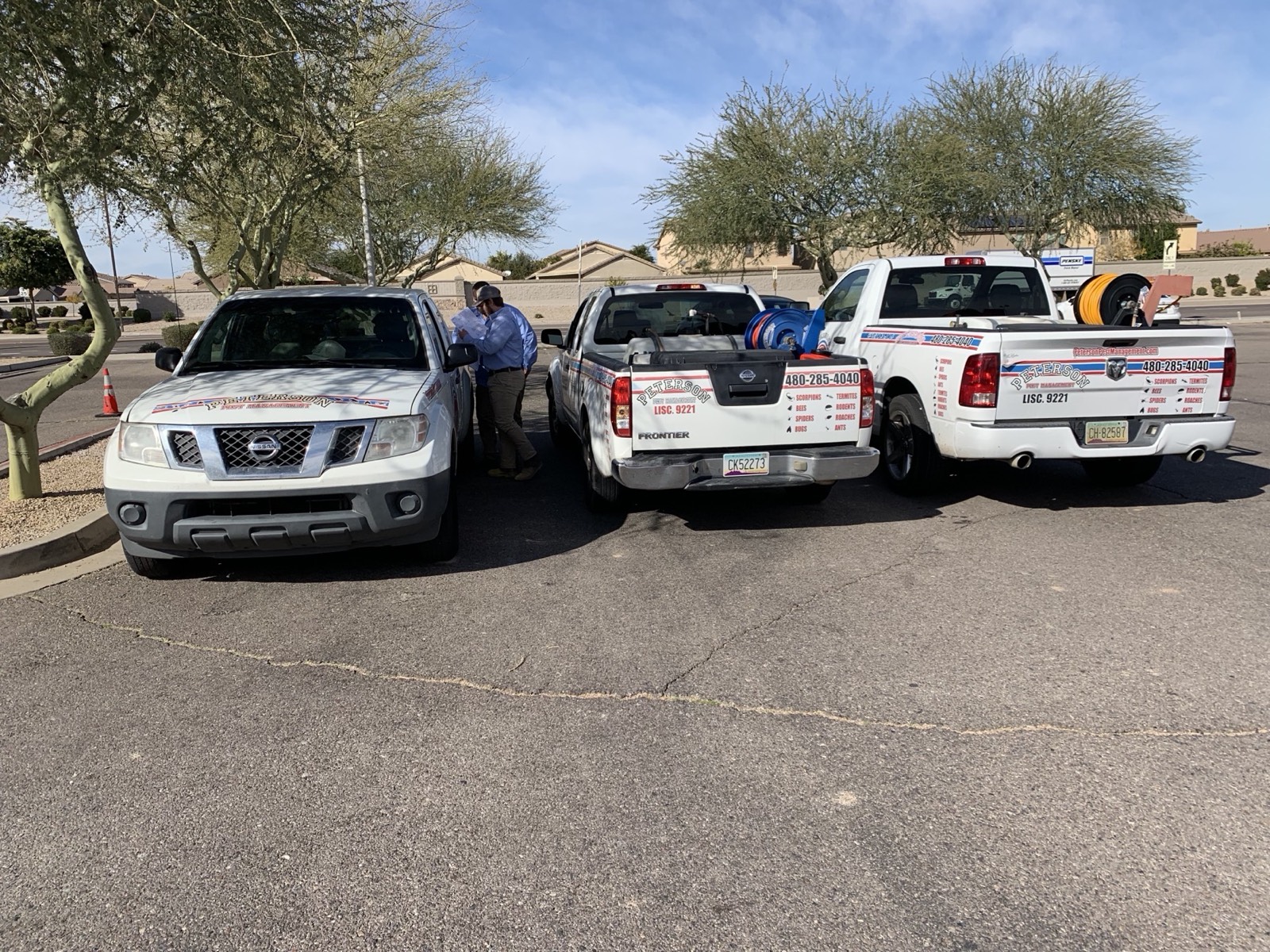
Keep kids and pets inside and away from the area, and do not spray it yourself. A passing swarm often moves on within a day or two on its own, but a colony that has settled into a wall, a shed or an irrigation box will not leave on its own, and a call is the next step either way.
Colonies split and send out swarms as the weather warms in spring, and monsoon storms in summer can knock loose an established hive or push a swarm to look for new shelter. Both seasons bring more bee calls than the rest of the year combined.
Most wild honey bee colonies in the East Valley carry Africanized genetics at this point, and colonies with that lineage tend to defend the nest more aggressively and in greater numbers than the strain most people picture. That is the practical reason not to treat a hive on your own property as a do-it-yourself problem.
Block wall weep holes, irrigation valve boxes, sheds, attics and pool equipment enclosures are the spots Peterson finds bees most often. All five give a colony a dark, protected cavity close to water, which is exactly what they are looking for. Pool equipment enclosures come up often for the same reason, a tucked-away cavity sitting right next to a steady water source.
A bee call starts with an assessment of where the colony has settled and how it is accessed, followed by removal of the colony from the cavity. Once the bees are out, our technicians can advise on sealing the opening so the same spot does not draw another swarm later in the season.
A swarm resting in a tree or on a fence for a day is often just resting between locations and may move on by itself. A colony that has gone into a wall cavity, an eave or a valve box has settled in and needs to be removed, because it will keep growing where it is.
A colony that has been in a cavity for any length of time has built comb and brood inside that space, not just the cluster of bees visible at the entrance. Knocking down what you can see from outside does not address what has been built inside the wall or eave, and comb left behind can draw pests or another swarm later. Removal is aimed at the colony itself, not just the bees visible at the opening.
Bees are drawn to a cavity, not a specific bee. Removing a colony without addressing the opening it used just leaves that same weep hole or gap ready for the next swarm that passes through. Advice on sealing entry points is part of the visit once the colony itself has been handled.
A swarm that just landed is a different situation than a colony that has been working the same wall gap for weeks. The longer a colony sits in a cavity, the more comb it builds and the more established it becomes, so a call sooner rather than later usually means a simpler removal.
Bee calls turn up in every city Peterson serves, spring swarms and monsoon-season colonies do not stay in one neighborhood. Gilbert, Mesa, Chandler, Queen Creek and Phoenix are all on the route.
Somewhere else in the Valley? Text the address to (480) 285-4040 and we will tell you straight whether it is on the route.
A swarm is bees in transit, often resting in a cluster on a branch or fence while scouts look for a permanent spot. A hive or colony has already settled into a cavity such as a wall, shed or valve box and is building comb there. Swarms sometimes move on their own; settled colonies need to be removed.
Most wild colonies in the East Valley carry Africanized genetics at this point, so it is reasonable to treat any unknown colony as one that will defend the nest aggressively. That is why the safest move is to keep people and pets away and call rather than approach it.
A cavity that has hosted one colony, a weep hole, wall gap or valve box, can draw another swarm later if it is left open. Sealing the opening after removal is the step that keeps the location from becoming a repeat problem.
Yes. Block wall weep holes and voids are one of the most common places colonies set up in the East Valley. The colony is removed from the cavity and the opening can be sealed afterward.
Spring, as colonies split and send out swarms looking for new locations, and again during monsoon season, when storms can disturb an established hive or push a swarm to look for shelter.
No. Do not spray a swarm or hive yourself. Keep kids and pets inside and away from the area and call or text (480) 285-4040.
One number, and it reaches our team. Call, text a photo of what you found, or leave your info below and we'll get back to you.
or send it hereFamily owned · AZ Lic. #9221 · Gilbert, Arizona