
Home / Scorpion Control
Scorpion ControlBark scorpions are the East Valley's most common call, and they live in the block wall, the yard and the gaps around your foundation, not just the spot on the ceiling where you saw one. Peterson treats the whole property, not just the bug you found.
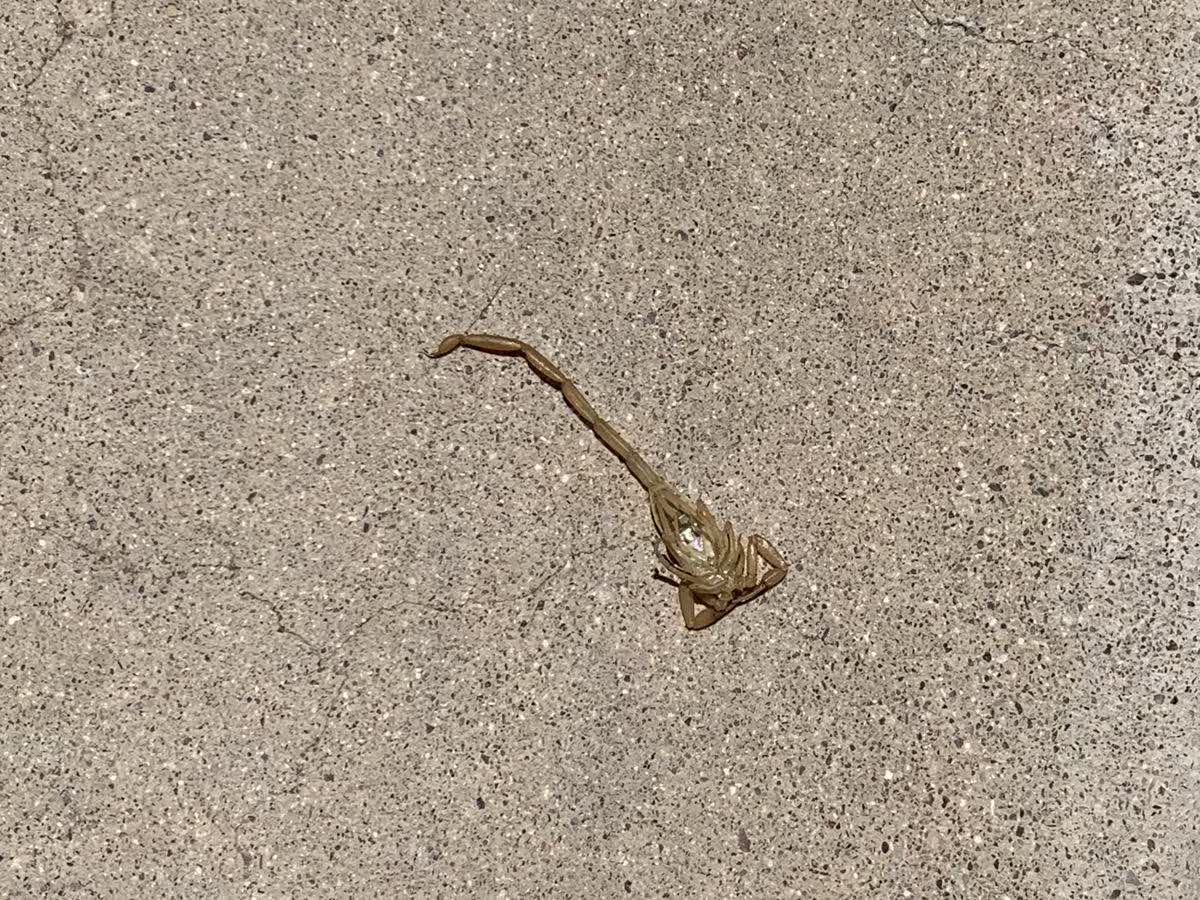
Bark scorpions live in block walls, and Gilbert, Mesa, Chandler and Queen Creek are built almost entirely out of block walls. That is the short answer. The longer answer is that block construction gives scorpions exactly what they want: dark, narrow gaps between block and mortar, cool during the day and warm at night, with easy vertical climbing between the yard and the top of the wall. From there it is a short trip through a weep hole or an open gap around a door or window into the house.
Irrigation makes it worse. Drip lines, grass, citrus trees and mulched beds keep the ground softer and cooler than the surrounding desert, which draws in the crickets, roaches and other small insects that scorpions eat. Where the food source is steady, the scorpion population settles in and stays.
A lot of Gilbert and Queen Creek is newer subdivisions built on former farmland and open desert. Grading and construction do not eliminate the scorpions that were already living on that ground, they push them toward the nearest cover, which is usually the new block wall and landscaping going in around the house. Homeowners in brand-new construction are often surprised by scorpion activity in the first year or two, when in reality the population was there before the house was.
A Peterson scorpion service treats the whole property in one visit, because a spot spray only kills what you can see and leaves the source untouched. A standard visit covers:
Every visit is planned around your family and pets, and our technicians walk you through what to expect before and after the treatment.
Bark scorpions glow blue-green under ultraviolet light, so a blacklight flashlight after dark is a simple way for homeowners to check their own block wall, patio and landscaping. It won't fix the problem, but it is a useful way to see the activity level before your first service and again afterward.
Most homeowners who call after a spot spray describe the same pattern: something got sprayed, it worked for a week or two, and then scorpions were back. That happens because the treatment only reached the surface where the bug was seen. The scorpions living inside the block wall, under the rock bed or behind a woodpile were never touched, and they keep producing more that eventually find their way in again. Treating the interior, the exterior perimeter and the block wall and yard together, on a schedule, is the difference between a treatment that lasts and one that only buys a few weeks.
Calls climb every summer once the heat sets in. Scorpions come out at night looking for water and cooler ground, which is exactly what a shaded patio, a pet water bowl or a damp irrigation box offers next to your house. Monsoon season adds another push: storms flood low-lying yards and block wall footings, and scorpions move up and in to stay dry, often showing up inside for the first time right after a summer storm. Pool equipment, irrigation boxes and anywhere else moisture collects near the foundation are worth a look during these stretches, because they draw scorpions in the same way a woodpile or rock bed does.
Crickets follow the same seasonal pattern and matter just as much, since they are a primary food source for bark scorpions. A yard that is drawing in crickets after dark, whether from a porch light left on or irrigation keeping the ground soft, is also drawing in what eats them. Part of a scorpion service is looking at what is feeding the population, not only where the population is hiding.
Somewhere else in the Valley? Text the address to (480) 285-4040 and we will tell you straight whether it is on the route.
Most East Valley homes with scorpion activity do best on a recurring schedule, because bark scorpions keep moving in from block walls, neighboring yards and new construction. We look at your property and your activity level and recommend the interval that fits, and one-time service is available if you only need a reset.
A bark scorpion sting is painful for anyone, and it can be medically significant for small children, older adults, or anyone who has a strong reaction. If someone stung is having trouble breathing, severe swelling or symptoms that concern you, treat it as a medical situation and seek care. Beyond that, our job is reducing how many scorpions get inside in the first place.
A single spot spray usually kills what you can see and leaves the population that sent it. Bark scorpions live in the block wall, the yard and the gaps around the foundation, not just the spot where one showed up on the wall. Treating the interior, the exterior perimeter and the block wall and yard together is what actually changes how many get inside.
Yes, alongside treatment. Weep holes, gaps under doors, and openings around plumbing and utility lines are all ways scorpions get from the block wall into the house. Sealing the obvious entry points reduces how many make it inside between visits, and our technicians will point out the spots worth sealing at your home.
Often, yes, at least for the first few years. New subdivisions in Gilbert and Queen Creek are frequently built on former farmland and open desert, and grading a scorpion population off its native ground pushes it toward the nearest cover, which is often the new block wall and landscaping. Established neighborhoods can still have plenty of activity, but new construction tends to see a spike early on.
Yes. Bark scorpions glow blue-green under UV light, so a blacklight flashlight after dark is a simple way to see what is actually on your block wall, patio and landscaping. It will not tell you how to treat the problem, but it is a useful way to see the activity level before and after service.
One number, and it reaches our team. Call, text a photo of what you found, or leave your info below and we'll get back to you.
or send it hereFamily owned · AZ Lic. #9221 · Gilbert, Arizona